Wednesday, March 6, 2013

A Biography: The Life of Louisa May Alcott

Louisa May Alcott, about age 25
The classic and popular book, Little Women, is made even richer by learning more about the life of the author, Louisa May Alcott. She was an avid writer, and her passion for writing grew increasingly throughout her life.

Louisa was born in 1832 and died at the age of fifty-five in 1888. In her spare time, she liked to write stories and plays for her and her sisters to dramatize. She had three sisters: Anna, the oldest, Elizabeth, the second youngest, and May, the youngest. Louisa based the sisters of Little Women on her own sisters.

Louisa and her sisters received the majority of their schooling through their father at home. In addition, they received education through close family friends such as Ralph Waldo Emerson and Nathaniel Hawthorne. Poverty forced Louisa and her sisters into the work force at a young age. Some of her work included being a teacher, seamstress, governess, domestic helper, and writer. She did these roles in many different locations, because her family moved multiple times.

The Alcott family moved to a home in Concord, Massachusetts, in 1840. There, Louisa adapted many stories and childhood memories she had with her sisters and used them in her book, Little Women. The Alcotts finally purchased and settled in a different home in Concord, which they named “Hillside.” Similar to the story-line in the book, Louisa’s younger sister, Elizabeth, died from scarlet fever, and Louisa’s older sister, Anna, married and moved away from their family. At this time, Louisa felt a strong breaking of their sisterhood. With these changes, Louisa had to work more to support the rest of her family.

One thing she did to support her family was serve in the American Civil War. This contrasts with the book, Little Women, in which the fictional father served in the war. Louisa served as a nurse in the Union Hospital for six weeks. Her letters to home were revised, published, and titled Hospital Sketches. She published many other stories and novels, often under the pen name A. M. Barnard, but Louisa used her real name in her book Little Women.

At age twenty, Louisa May Alcott published Little Women, which has become a classic and popular novel. Each of the fictional characters in the book had different traits taken from her family and friends. Louisa portrayed her passion for writing through her main character, Jo. Although, many events which occur in the book mirror the author’s life, some events which happened in Little Women never happened in Louisa’s life. For example, Louisa never married and had not planned for Jo to get married either, but her editor insisted that Jo marry.

In conclusion, Little Women is more than just a classic, fiction book. It has the Alcott family history intertwined throughout many events of the book. Understanding Louisa May Alcott’s personal life helps bring real life aspects to her fiction book. Though Louisa loved to write, her true passion was for her family and friends and the impact they made on her life.

– By Kate Wetherall

Wednesday, January 16, 2013

The World of Number the Stars: Families of World War II

Though wars are mostly known for their battles, it is also important to understand what life was like on the home front during those times. What was it like for children and their families during World War II? What did different countries do to keep families safe? Did the war affect jobs at all? Was it hard to get food or clothes? What did children do for fun? Did they go to school? What did they do to support the war effort? During World War II, the lives of children and their families living in America and the life of the Johansen family from Number the Stars (along with other families from Nazi occupied countries) had similarities and differences. One characteristic that was similar with all families during World War II is that their lives changed because of the war.  
 
Since much of the war was fought in Europe, Americans felt fairly safe. However, all that changed on Sunday, December 7, 1941, when the Japanese bombed Pearl Harbor. Suddenly, a war that seemed so far away started to get closer to their homes in America. After that, some cities began making the people who lived there put dark paper or dark curtains over their windows so that if bombers came, they would not see the city. They also turned off the street lights and sometimes had air raid drills. Children, like Annemarie Johansen from Number the Stars, who lived in the Nazi-occupied parts of Europe, were also forced to put blackout curtains over their windows. They had a curfew during the night and soldiers on the streets. 

In Denmark and other occupied countries, some people joined the Nazi army, while others stayed with their original jobs. Many Jews in occupied countries lost their jobs because the Nazis closed down their shops. Though the war was mostly fought on non-American soil, Americans were affected by the war also. One change was that the U.S. factories that once made every day appliances began to make weapons and other war-related items. Since most of the men who worked in the factories left to fight in the war, women worked in the factories. In some states, even children worked in factories part-time. The war, as terrible as it was, helped get the United States out of the Great Depression. Because more jobs opened up in the army and in the factories that made war materials, less people were out of work.   

During the war, everyday items were hard to find. If a family lived in a Nazi-occupied country, it would be hard to find a new coat, clothes, shoes, hats, and gloves. If one of those items was found, it would be very expensive. Usually mothers would have to make and re-make dresses, shirts, and other clothing items for their children. In Number the Stars, Kirsti’s mother bought her shoes made of fish scales because there were not any other shoes that she could buy, and Kirsti needed new shoes.  It was also hard to get food items, because most of the food was used to feed the Nazi army. In America, many food items, shoes, and gas were rationed to make sure that the army had enough to eat and enough other provisions that they needed.

In Nazi-occupied countries during the war, life was very different for the children who lived there. Many of the things that children enjoyed so much disappeared when the war began. Many foods, such as ice-cream and frosted cupcakes, were almost impossible to find. Children living in Copenhagen could not visit Tivoli Gardens any more, because the Nazis had closed it and burned part of it when they came. Families did not take vacations either. Since most families had trouble just getting food on the table, they did not spend money on pleasures. Most children would play with whatever things they already had. As for school, most children continued to attend, except for Jewish children who had been prohibited from taking classes there. In America, children also went to school and made do with what toys and things that they had. They had parks and places to play, but not many things to play with, since factories that used to make toys had begun to manufacture weapons.

Sometimes in German-occupied countries, older children, like Lise Johansen and her fiancé Peter, joined resistance fighters and fought against the Nazis. A few children may have even helped as Annemarie did when she helped her Jewish friend Ellen escape to Sweden. Children in America helped the war effort in many ways also. One way was by planting Victory Gardens. When the seeds that they planted grew, they would use the produce as food for their family so the farmers could send more food to the troops overseas. They also collected leather, paper, string, cloth, and metal to be recycled and given to the factories to be made into items for the army. In Chicago, Illinois, children saved $263,148.83 worth of change for the government to buy two airplanes, 125 jeeps, and a motorcycle. Many older boys even joined the army.

The lives of children and their families were changed because of World War II. Many families gave up their old way of life to help the war effort. Many in Europe were forced to give up their old way of life. Even though many families experienced hardship during the war, they still continued to fight for what they believed was right.
By Clara May


---
Sources:

Josephson, Judith Pinkerton. Growing up in World War II. Minneapolis: Learner Publications Company, 2003. Print.

Lowry, Lois. Number the Stars. New York: Bantam Doubleday Dell Publishing Group, Inc., 1989. Print.

Nicholson, Dorinda Makanonlani. Remember World War II: Kids Who Survived Tell Their Stories.  Washington D.C.: National Geographic Society, 2005. Print.

Whitman, Sylvia. Children of the World War II Home Front. Minneapolis: Carolrhoda Books, Inc., 2001. Print. 

Monday, January 14, 2013

A Book Report: Number the Stars

In Number the Stars by Louis Lowry, ten-year-old Annemarie and her friend Ellen Rosen are waiting for World War II to end. In Copenhagen, Denmark, everywhere they look, there is a Nazi soldier ready to mock them. The Jews are being killed day by day, and suddenly the Nazis find out Ellen is a Jew. Annemarie and her family do everything they can do to keep Ellen’s family safe. As Ellen tries to blend in to Annemarie’s family, both Ellen and Annemarie must learn courage and bravery if they want to survive.

This story begins when Ellen and Annemarie are walking home from school one day. When the girls are stopped by Nazi soldiers on the street, they see just how cruel the soldiers really are. Later in this book, Annemarie and Ellen move into Annemarie’s uncle’s house. There they learn to have faith and trust that everything will turn out okay. Another scene where Annemarie must practice bravery is when she is sent into the woods with a package to give to her uncle who is at the dock in his fishing boat, waiting to smuggle Ellen and her family out of Denmark. She doesn’t know what is in the package or where it came from. As she is delivering this package, the Nazi soldiers stop her. Annemarie decides to act immature like her little sister Kristi would act. Acting like this saves Ellen and other Jews and gets them safely to Sweden. 
 
In this book, I learned that we should always stand up for what is right, even if it means getting hurt. Louis Lowry made Annemarie a very lovable character, because she stood up for her friend no matter what happened to her. She made it so clear that you should be brave and stand up for what is right even if it means getting in trouble. This book is a page turner – it will leave readers wanting to keep reading until the very end of the book. Number the Stars has been given many awards including the Newberry Award Medal, and has been named the book of the year by the School Library Journal.  

By Leigh Collins

Wednesday, January 9, 2013

A Book Report: Anne of Green Gables

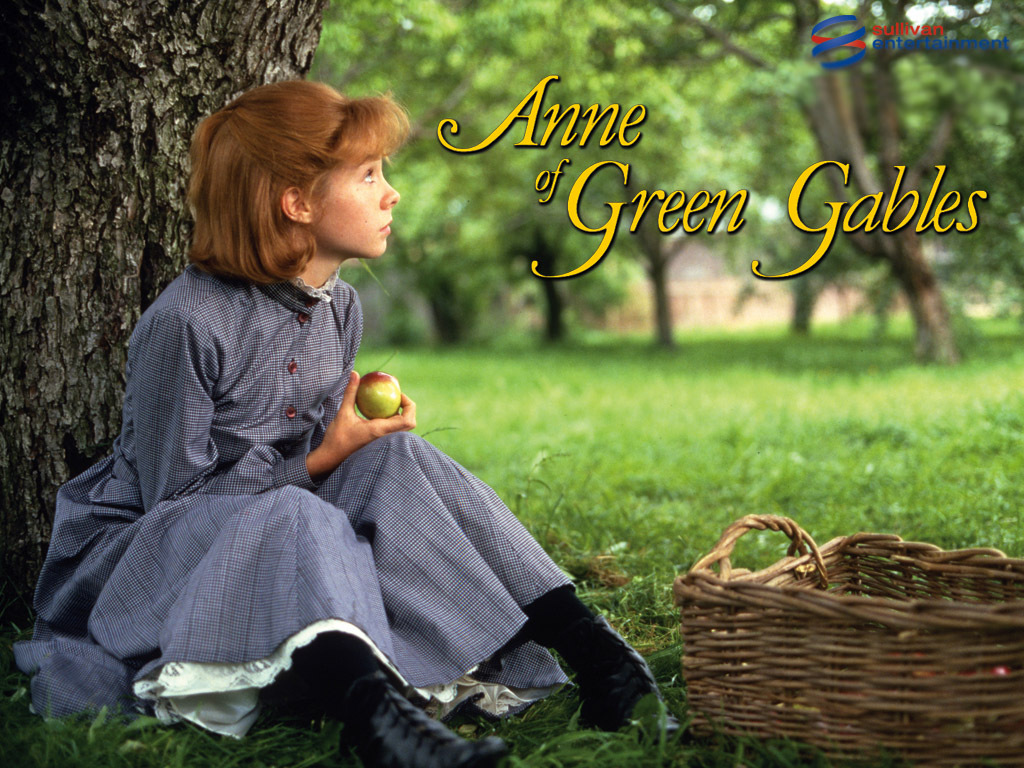
Anne of Green Gables was written by L. M. Montgomery. This book is about a girl named Anne who is adopted by brother and sister Matthew and Marilla Cuthbert. To Avonlea and Green Gables, Anne is a bright, sweet girl with a very big imagination. Anne’s parents died when she was very young, and Anne was in and out of the orphanage all her life. This book starts when Anne is eleven and ends when she is almost seventeen.  

The story begins when Matthew and Marilla decide to adopt a boy to help around their farm. Matthew goes to town to pick him up. But, when he gets there, a girl is sitting there waiting instead of a boy. He has no choice but to bring her home and ask Marilla what to do. On the ride home, Matthew grows to like Anne, so he persuades Marilla to keep her.
 
One of my favorite parts of the book is when Mrs. Lynde comes over and makes fun of Anne’s red hair. Anne lashes out at Mrs. Lynde and has to go and apologize to her. 

Another favorite part is when Anne and her friends decide to play “Lily maid,” and they choose Anne to go into the boat and be the “Lily maid.” The boat gets a crack and starts to sink in the middle of the lake. Anne climbs out on the side of a bridge. Gilbert sees her, rows his boat over to her, and rescues her.

The book ends when Matthew dies from a heart attack, and Anne had just won the Avery Scholarship at Queen's Academy. Anne decides to stay home and help Marilla because Marilla is losing her eye sight. Gilbert decides to give up teaching in Avonlea so that Anne can teach there and be near to Marilla. 

I really like Anne’s personality and her imagination. She is a very lovable character. I also think Matthew is a lovable character because of his sweetness for Anne. I found it funny how Anne needed puff sleeves, how she cared so much for her beauty, and how much she hated her red hair. Overall, I would recommend this book.   

By Jennifer Fuhrman

Monday, January 7, 2013

A Review: Anne of Green Gables

Anne is adopted and lives in Green Gables with her new "owners" Marilla and Matthew. She is very imaginative and makes herself believe that she goes on wonderful adventures, but the only adventures she actually goes through aren't as wonderful as the one she thinks of herself. But each and every adventure teaches her a lesson.

Anne of Green Gables is about a very young and imaginative orphan girl who, with a lot of mix-ups, was adopted. Marilla and Matthew were expecting a boy, but it turned out that they received a girl. Marilla almost sent her back, but Matthew wanted to keep her all along because he liked her personality. When Anne heard that she was going back, she was so upset that she would not have a nice home to live in. However, when Marilla heard about Anne's past, she started to feel sorry for her. She eventually decided to keep her, which made Anne very happy, and it also made her feel like she had a real family and a real home in Green Gables forever. 
  
Overall, I did like this book. It has a lot of good and funny parts and it is very enjoyable to read. There are parts when Anne will talk on and on about a certain thing, then all of a sudden she will change the subject. Those parts were very funny, in my opinion. It also was sad in some parts, but most of the time the sadness would be resolved. Sometimes there were pointless parts where I think the author just put them in there to fill space. But, overall it was still a very good book.

I would recommend this book to others because it is good and enjoyable to read and because it teaches some good lessons about obedience, changes when going through adoption, and figuring out the difference between reality and fantasy. It does take some time to read it, but it is worth it. Personally, I liked this book and would recommend to many people to read.

By Alexandria Adelle Mcbeth

Sunday, December 30, 2012

A Book Report: The Lion, the Witch, and the Wardrobe (An Adventure About Salvation)

For most kids, hiding in a dark wardrobe can be strange or scary, but for the Pevensie children, it was the start of an epic adventure. The Lion the Witch and the Wardrobe  takes place in the English countryside during World War II. The adventure begins when Peter, Susan , Edmund and Lucy are sent away to a professor’s house in the countryside to escape the bombings happening at home in London. They enter the magical land of Narnia through a wardrobe and find themselves in an entirely new land: a place of un-ending winter and a place where animals speak. They soon learn that they are the fulfillment of a prophecy spoken of throughout the land. 

The characters in this novel are fascinating. The White Witch, who claims to be the queen of Narnia, is one of the antagonists. The Great Lion Aslan, a protagonist, is the real king of Narnia. Edmund Pevensie follows his younger sister, Lucy, into Narnia. While he is looking for her, he meets the White Witch, falls under her spell, and betrays his siblings. In the meantime, Mr. and Mrs. Beaver take Peter, Susan, and Lucy to Aslan. Only the Great Lion is able to take back Edmund from the White Witch. The Witch says that Edmund must die on the Stone Table, but Aslan sacrifices himself so Edmund can live. In the end, Aslan comes back to life and defeats the Witch. Peter, Susan, Edmund and Lucy become the kings and queens of Narnia and reign for many years before magically and suddenly returning home to England. 

The Lion the Witch and the Wardrobe was written by C.S. Lewis in 1950. He converted to Christianity as an adult when his two friends, J.R.R. Tolkien (the author of The Lord of the Rings) and Hugo Dyson witnessed to him in 1931. He responded to his new-found faith the way writers do: by creating his own story of salvation for children to read and enjoy in the hopes of maybe even leading them to a saving faith. It is clear that Lewis’ Christian worldview and faith are the driving themes of this novel. 

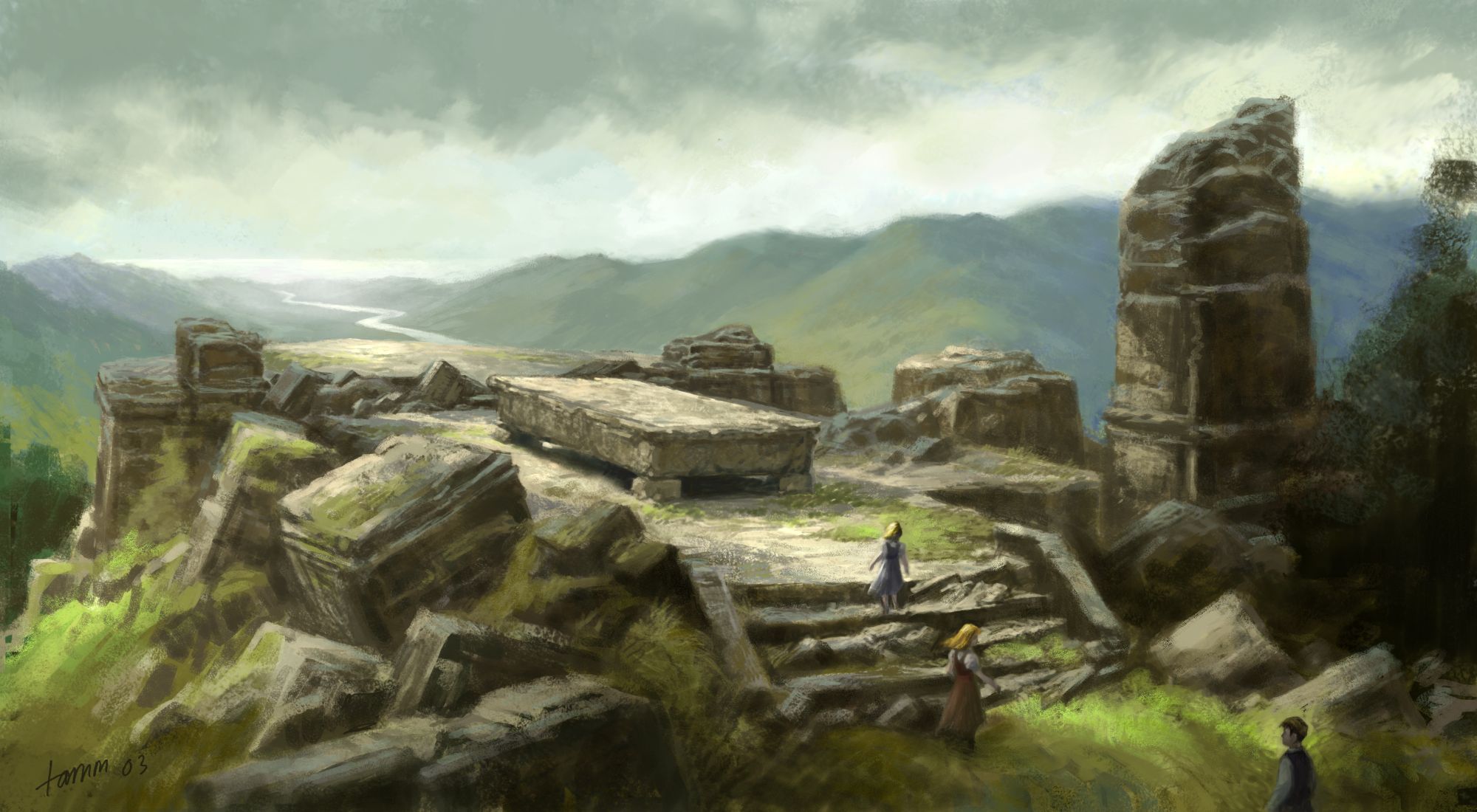
There are many symbols in this book. The most important is Aslan, who represents Jesus. Edmund represents all of us, as sinners, who can be tempted by sin and easily give in to the darkness within. Another symbol is the Stone Table, where Aslan sacrificed himself for Edmund just like Jesus sacrificed Himself on the cross for us, even though we are the ones who deserve to die. 

I really enjoyed reading The Lion, the Witch, and the Wardrobe because of its action, suspense, and its story of salvation through sacrifice and grace. As the youngest in my family and the tallest in my class, I identify with Lucy the most. However, all of us, as sinners, should identify on the whole with Edmund. Even though this novel was written as a children’s book, I feel it is fascinating for people of all ages.

By Shieldmaiden

Friday, December 21, 2012

A Review: Anne of Green Gables

I really enjoyed reading Anne of Green Gables by L.M. Montgomery. There are so many parts in the book that I love, but I’ll try to pick out three of my favorites. I really enjoyed how the author describes every event through Anne’s optimistic point of view. I also like how Anne is so adventurous and talkative. I really like the book all together. 

One of my favorite parts is when Anne breaks the slate over Gilbert Blythe’s head. It all starts when Gilbert teases Anne by calling her hair “carrots.” Anne becomes furious because she hates it when people criticize her looks. She stands up in class and picks up her slate and slams it on his head. She, then, never speaks to him for a while, and she denies his request for forgiveness until later on in the book. 

My second favorite part of the book is when Anne sees a peddler on the road, and the peddler says that the dye would turn her hair a beautiful raven black, but, instead of turning her hair raven black, it turns it into an ugly green color. Marilla finds Anne crying in her bed with the covers over her head. She asks Anne what she’s doing, and Anne replies by saying, “I dyed my hair.” Marilla then has to cut Anne’s hair very short. That time vanity got the best of her. 

My third favorite part of the book is when Diana becomes drunk. It begins when Anne invites Diana over for tea while Marilla is out. Marilla told Anne that they could have cake and raspberry cordial out of the cellar. When Diana arrives, Anne acts like a wonderful hostess. When she goes to get the cordial, she picks up the current wine instead by accident. Not realizing her mistake, Anne tells Diana that she can have as much “Raspberry Cordial” as she wants. When Anne is in the kitchen preparing the cake, Diana has several glasses of the current wine and becomes drunk as Anne returns from the kitchen. Diana says that she has to go home, but Anne does not understand why, so she follows Diana home and realizes that Diana was, in fact, drunk. And Diana’s mother does not let Diana or Anne speak to each other until Anne helps out her family in a surprising way.

This book is the kind of book I’m going to remember for many reasons. The characters are cool, and Anne is always talking. The setting of the book is great, and the description of everything is awesome. It really is a great book.
By Victoria Scarlett Doman